Welcome to the official website of [Huizhou Jiali Technology Co., LTD.]
Whatsapp: 0086136-3199-6768 | E-mail:joe866@188.com Latest Products | Get in Touch


8 Expert Tips to Choose a Lampshade for a Table Lamp
2026-07-13 20:01:28
Click:
“
Replacing a lampshade is one of the most cost-effective ways to instantly modern
”
Replacing a lampshade is one of the most cost-effective ways to instantly modernize a room's aesthetic. However, when you set out to choose a lampshade for a table lamp, you quickly realize that the process is far more complex than simply picking a color you like. A shade that is disproportionately small makes the lamp look comical, while a shade that is too large will dominate the table space and look physically unbalanced. Furthermore, selecting the wrong fitter type means the shade simply will not attach to your lamp at all.
From our experience working with top-tier hospitality brands and commercial interior designers, the difference between a high-end, custom look and a cheap, off-the-shelf appearance often comes down to the precise mathematical proportions of the lampshade. In this comprehensive guide, we will break down the exact commercial standards and design rules you must follow to choose a lampshade for a table lamp correctly.
Quick Answer
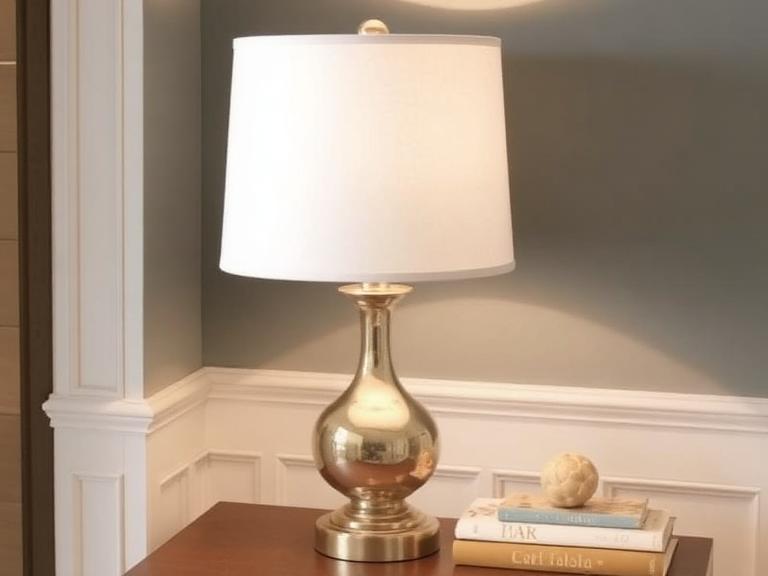
To properly choose a lampshade for a table lamp, you must follow the industry-standard 2:1 proportion rule. The height of the lampshade should be exactly two-thirds (2/3) the height of the lamp base (measuring from the bottom of the base to the bottom of the socket). Additionally, the bottom width of the shade should be roughly equal to the height of the lamp base, and the shape of the shade should mirror the geometric shape of the base (e.g., round base to round shade, square base to square shade). Ensure you identify your lamp's fitter type (Spider, Uno, or Clip-on) before purchasing.
What is a Lampshade Fitter and How Does it Work?
Before you even look at fabrics or shapes, you must understand the anatomy of your lamp. The mechanism that connects the shade to the lamp base is called a 'fitter.' In most professional situations, lamps utilize one of three primary fitter types. If you buy a shade with the wrong fitter, it will be entirely useless.
- Spider Fitter: This is the most common hardware for medium to large table lamps. It features a center ring with spokes branching out to the top edges of the shade. It sits on top of a metal 'harp' that surrounds the bulb, and is secured in place with a decorative finial screwed on top.
- Uno Fitter: Common on smaller desk lamps and older vintage pieces. The center ring sits below the bulb, directly threading onto the lamp socket itself.
- Clip-on Fitter: Exactly as it sounds, this features wire loops that clip directly onto the glass of a standard light bulb. We generally only recommend these for small, lightweight accent lamps or chandeliers.
The 8 Tips to Choose a Lampshade for a Table Lamp
If you want to choose a lampshade for a table lamp that looks professionally specified, follow these eight uncompromising rules.
1. Master the Vertical Proportions (The 2/3 Rule)
The golden rule of lighting design dictates that the shade height should be approximately 40% of the total height of the entire fixture, or roughly two-thirds (66%) the height of the base alone. To calculate this, measure your lamp from the bottom of the base up to the bottom of the bulb socket. Multiply that number by 0.66. The resulting number is the ideal height for your new shade. A shade that is too tall makes the lamp look top-heavy; a shade that is too short will expose the unsightly metal harp and socket.
2. Master the Horizontal Proportions (The 1:1 Rule)
Width is just as critical as height. The bottom diameter of the lampshade should closely match the height of the lamp base. For example, if your lamp base is 14 inches tall, you should look for a shade with a 14-inch bottom diameter. Furthermore, the shade must be wider than the widest point of the lamp base by at least half an inch on each side. If you are outfitting narrow bedside tables, you may need to adjust this rule slightly to prevent the shade from hanging off the edge of the nightstand.
3. Mirror the Geometry of the Base
In most professional situations, we recommend matching the shape of the shade to the shape of the base. If you have a round, bulbous, or cylindrical base, choose a round shade (such as a drum, empire, or bell shape). If you have a square, rectangular, or sharply angular base, pair it with a square, rectangular, or hexagonal shade. Mixing a square shade on a round base often creates visual discordance.
4. Select the Right Translucency for the Room's Function
When you choose a lampshade for a table lamp, you must decide what the light's primary job is. Do you need task lighting or ambient mood lighting? Translucent shades (made of light-colored linen, silk, or thin paper) allow light to emit through the sides of the shade, illuminating the entire room. Opaque shades (made of heavy fabric, metal, or featuring dark, hardback liners) block light from passing through the sides, instead directing it strictly up and down. Opaque shades create dramatic pools of light and are excellent for moody environments.
5. Hardback vs. Softback Construction
Understanding construction is vital. Hardback shades consist of a fabric laminated onto a rigid plastic (polystyrene) lining. They offer a crisp, modern, clean look and allow maximum light transmission out of the top and bottom. Softback shades are constructed entirely of fabric stretched over a metal wireframe, often featuring a fabric inner lining. Softbacks feel more traditional, luxurious, and diffuse light warmly.
6. Hide the Hardware
A common mistake when you choose a lampshade for a table lamp is failing to account for the 'drop.' The drop is the distance from the top of the shade down to the fitter ring. When viewing the lamp at eye level, you should not be able to see the saddle, the socket, or the bulb. The bottom edge of the shade should fall just below the socket switch. If your current harp is too tall, causing the shade to sit too high, you can simply purchase a shorter replacement harp.
7. Consider the Fitter Type and Bulb Clearance
Heat dissipation is a critical safety factor. When you choose a lampshade for a table lamp, ensure there is a minimum of 2 to 3 inches of clearance between the light bulb and the inside fabric of the shade. If you are upgrading to high-wattage LED bulbs, the physical size of the bulb might be larger than traditional incandescents. Always check that the fitter type matches your base, and that the bulb fits comfortably without touching the shade materials.
8. Commercial vs. Residential Durability Requirements
For commercial users outfitting a lobby or hotel room, aesthetics must balance with extreme durability. Residential fabrics like delicate silk or unlined linen will stain easily and degrade rapidly under heavy daily handling. For heavy-duty applications, we recommend commercial-grade hardback shades covered in performance fabrics that can be wiped clean with a dry sponge.
Benefits of Upgrading Your Lampshade
Replacing a shade offers several distinct advantages over replacing the entire fixture. First, it is vastly more economical. You can breathe life into a vintage or heirloom lamp base for a fraction of the cost of a new luxury fixture. Second, it allows you to instantly pivot the style of a room. Swapping a traditional pleated bell shade for a sleek, black hardback drum shade immediately modernizes the space. Finally, changing a shade allows you to manipulate the light output, turning a glaring reading lamp into a soft, ambient glow.
Limitations: Who Should Just Buy a New Lamp?
While upgrading a shade is highly recommended, there are times when it is simply a poor investment. Who does not need a new shade? If your lamp base has faulty wiring, a loose socket that flickers, or significant physical damage to the finish, do not waste money on a shade. The cost of rewiring an old lamp plus the cost of a premium shade often exceeds the price of buying brand new hotel table lamps.
Furthermore, if you are undergoing a massive commercial renovation, piecemeal shade replacement is inefficient. In these scenarios, sourcing entirely new custom hotel lighting fixtures ensures design continuity and modern electrical compliance across the entire property.
Common Mistakes to Avoid
- Ignoring the Harp Size: Buying a beautiful shade and forcing it onto a harp that is two inches too tall. Always replace the harp if the shade sits at the wrong height.
- Mismatching Finials: The finial (the decorative screw on top) should match the metal finish of the lamp base, not necessarily the shade.
- Choosing the Wrong Shape for the Table: Putting a wide, round drum shade on a very narrow console table means the shade will physically protrude into the walkway, causing it to be bumped constantly. Use an oval or rectangular shade for narrow tables.
Buying Considerations for Commercial and Residential Users
When approaching the market, your purchasing criteria will differ wildly based on your application.
For beginners and residential users: Focus on fabric quality and accurate measurements. Bringing your lamp base into a local lighting store to physically test shades is often the best strategy to guarantee proper fit and scale before buying online.
For commercial users: When specifying lighting for hospitality, standardization and supply chain reliability are paramount. If a shade gets damaged in a guestroom, you need to know you can order an exact replica quickly. Consider partnering directly with a manufacturer who can provide durable, easily cleanable shades at scale.
Professional Wholesale Hotel Lamps & Home Lighting Manufacturer
Since 2009, JialiScott delivers premium lighting solutions worldwide — trusted by hospitality groups, wholesalers, and eCommerce leaders. We operate a modern 6000+ m² facility offering 15+ years of manufacturing excellence. Whether you need full-service OEM/ODM solutions or rapid replacements, JialiScott is your authoritative lighting partner.
Expert Recommendation
From our experience supplying major hospitality brands, we cannot stress enough the importance of the fabric backing. For the vast majority of applications, we highly recommend purchasing hardback drum or modified empire shades. They offer the cleanest lines, are highly durable, and prevent the 'yellowing' effect often seen with older softback shades.
If you are managing a property renovation and need to refresh hundreds of lamps quickly, our top recommendation is to source high-quality replacement shades directly from a manufacturer to ensure color consistency and volume pricing.
Wholesale new design hot sell white color fabric Replacement lampshade for Renovating the hotel

Specifically engineered for the rigorous demands of the hospitality industry, this clean, modern white fabric shade instantly updates older lamp bases. Its durable hardback construction ensures it maintains a crisp shape, providing excellent light diffusion for guestrooms and public areas alike.
View Product Details and Wholesale PricingFor cohesive property design, upgrading a table lamp shade is just the first step. You should ensure that your hotel wall lamps and hotel floor lamps carry a complementary shade style. For public spaces, consistency is key—matching your table lamp shades with the aesthetic of a hotel column wall sconce or hotel pendant lights creates a unified, professional environment.
Essential Reference Tables
Quick Summary Table: Sizing Rules
| Lampshade Dimension | The Golden Rule Formula |
|---|---|
| Shade Height | Multiply the lamp base height by 0.66 (2/3 rule). |
| Bottom Width | Should roughly equal the total height of the lamp base. |
| Width vs Base | Shade must be at least 1/2 inch wider than the widest point of the base. |
| Hardware Clearance | Bottom of the shade should cover the socket, dropping just below the switch. |
Comparison Table: Hardback vs. Softback Shades
| Feature | Hardback Lampshades | Softback Lampshades |
|---|---|---|
| Construction | Fabric laminated to rigid plastic backing. | Fabric stretched over a wire frame, often lined with fabric. |
| Light Output | Directs light strongly up and down; sides remain opaque/semi-opaque. | Diffuses light warmly and evenly through the sides of the shade. |
| Aesthetic | Crisp, modern, clean lines. Excellent for drum shapes. | Traditional, elegant, luxurious. Common for pleated or bell shapes. |
| Maintenance | Easier to wipe clean; highly durable for commercial use. | Requires gentle vacuuming or dry cleaning; prone to staining. |
Pros and Cons Table: Replacing a Shade vs. Buying a New Lamp
| Action | Pros | Cons |
|---|---|---|
| Replacing the Shade Only | Highly cost-effective; preserves heirloom/custom bases; instantly modernizes style. | Requires precise measurements; does not fix underlying electrical issues. |
| Buying a New Lamp | Guarantees modern electrical safety; shade is perfectly scaled by the designer. | Significantly more expensive; limits custom aesthetic choices. |
If you are managing specific brand standards, such as sourcing an exact embassy suites table lamp, buying the complete fixture from a certified manufacturer is always safer than trying to retrofit an old base. The same logic applies to architectural lighting like a hotel corridor ceiling light or upgrading a bathroom with a hotel led mirror—replace the entire unit for guaranteed commercial performance.
For overarching lighting packages, consider reviewing comprehensive hotel ceiling lights catalogs to ensure your table lamps complement the overhead illumination perfectly.
Frequently Asked Questions
How do I measure a lampshade?
Lampshades are measured using three dimensions: Top Diameter x Bottom Diameter x Slant Height. To measure the slant, place a ruler on the outside of the shade from the top edge straight down to the bottom edge. Always record these three numbers when looking for a replacement.
Can I put a round shade on a square lamp base?
In our testing and design experience, mixing a round shade on a sharply square base creates visual friction and is generally not recommended. A square base looks best with a square, rectangular, or heavily angular shade to maintain geometric cohesion.
Are all lampshade fitters universal?
No. The most common is the Spider fitter (which requires a harp and finial), but many lamps use an Uno fitter (which screws onto the socket) or a Clip-on fitter (which attaches to the bulb). You must verify your lamp's hardware before purchasing a shade.
Authoritative References & Industry Standards
To ensure your lighting choices meet rigorous safety and design standards, we reference the following organizations:
Author:
Huizhou Jiali Technology Co., LTD.









Prev : 13 Best Mirror with Lights for Desk: Professional Industry Guide
Next : 9 Creative Ideas for Exquisite Small Chandelier Lamp Shades
文章推荐


Huizhou Jiali Technology Co., LTD.
+86 136-3199-6768 Jamie Zhu
Whatsapp: 0086136-3199-6768 | E-mail:joe866@188.com
#1 Area,Tashin Group,Shuguang Avenue,Chenjiang Town,Huicheng District,Huizhou City,Guangdong Province,China
© 2023 Huizhou Jiali Technology Co., LTD. All rights reserved. | Login